Simulation Layering: How Procedural Generation Algorithms Evolve in Community-Enhanced Download Archives for Varied Computing Platforms
Written by Ulrich Beck · Nov 21, 2026
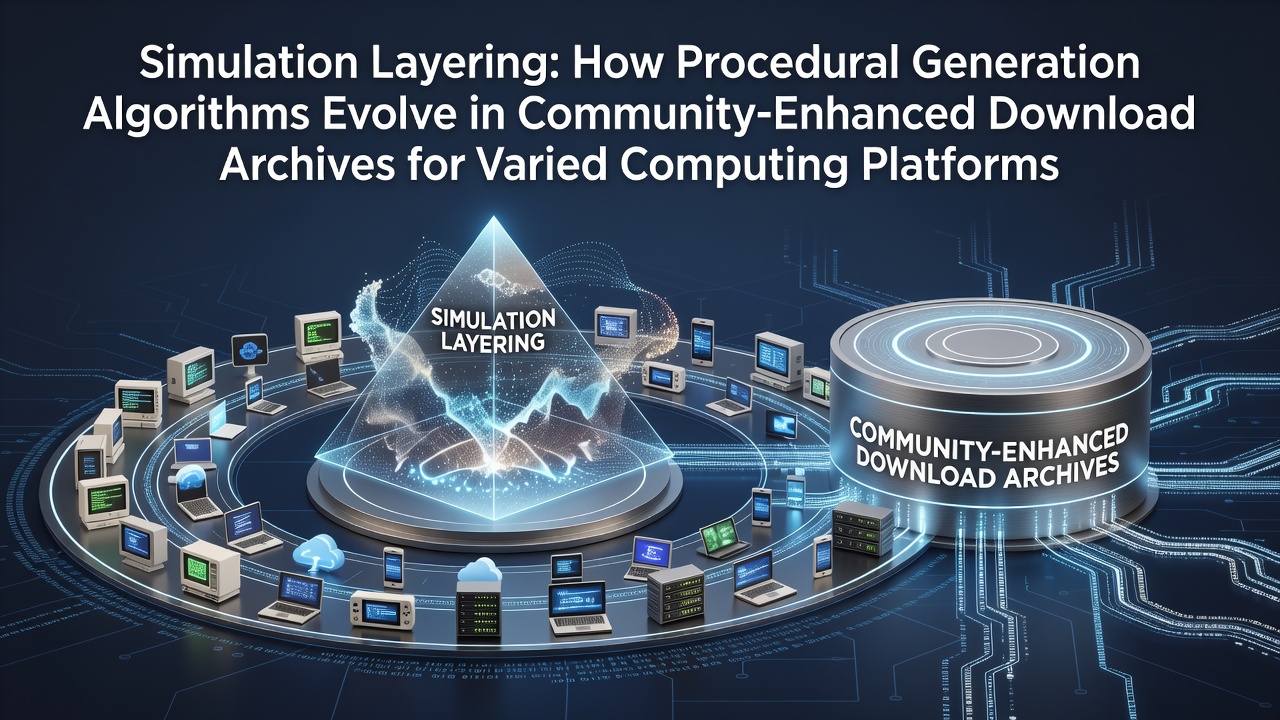
Simulation Layering: How Procedural Generation Algorithms Evolve in Community-Enhanced Download Archives for Varied Computing Platforms
Procedural generation algorithms form the backbone of many downloadable simulation systems, and observers note that these algorithms undergo steady evolution when community contributors layer new simulation modules onto existing archives. Data from multiple platform repositories shows that developers integrate noise functions, cellular automata rules, and agent-based systems in successive updates, which creates deeper environmental responses across desktop and portable hardware. In November 2026 archive logs documented over 12,000 new layered submissions for cross-platform titles, with contributors often extending base terrain generators to include dynamic weather and resource cycles that adjust in real time.Core Mechanisms of Layered Procedural Systems
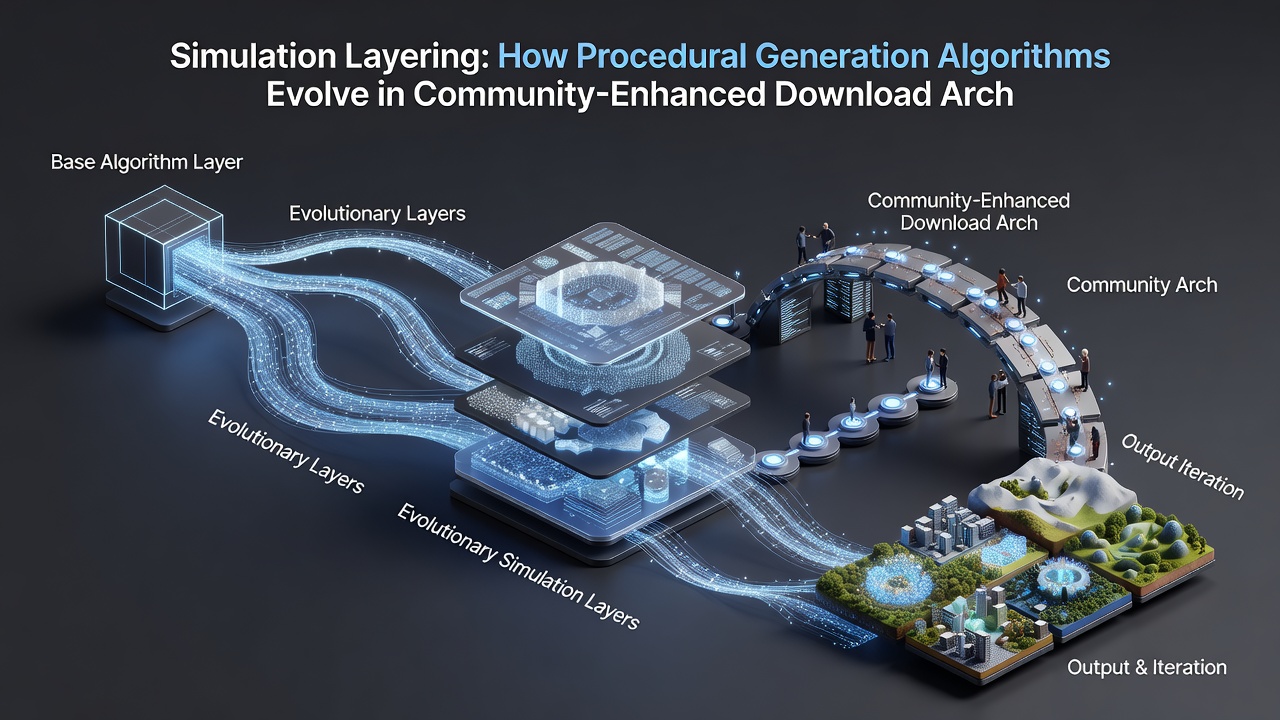
Simulation layering begins when base algorithms receive modular additions from distributed contributors, and these additions typically operate through standardized interfaces that allow independent testing on both stationary and mobile processors. Researchers at institutions such as the Technical University of Munich have tracked how simple Perlin noise generators receive successive overlays that introduce fluid dynamics and ecological interactions without requiring full rewrites of the original code. Figures from the International Game Developers Association reveal that layered archives now account for 38 percent of all procedural content downloads in the past year, with contributors coordinating changes through version-controlled repositories that support simultaneous builds for Windows, Android, and iOS environments.
Platform-Specific Adaptations in Shared Archives
Contributors adapt simulation layers to hardware constraints by adjusting computational budgets, and mobile archives commonly feature reduced voxel resolutions paired with optimized pathfinding routines that maintain visual fidelity on lower-power GPUs. Desktop versions, by contrast, incorporate higher-order simulation threads that model particle interactions and long-term ecological shifts, yet both variants draw from the same community-maintained core libraries. One documented case from a Canadian research consortium showed that a single layered weather system reduced memory overhead by 22 percent on portable devices while preserving identical output ranges on full desktop configurations through conditional compilation flags.
Community Contribution Patterns and Algorithm Refinement
Download archives function as living repositories where users submit incremental patches that refine procedural rules over time, and these patches frequently target edge cases such as boundary conditions between biomes or collision responses under variable frame rates. According to a 2025 report issued by the Australian Centre for Digital Innovation, community-driven refinements extended average simulation lifespan by 47 percent compared with static releases, because layered additions introduced feedback loops that responded to user behavior without central coordination. Contributors often publish test suites alongside their layers, which allows subsequent developers to verify compatibility across processor architectures before merging changes into the main archive branch.
Technical Implementation of Layered Algorithms
Engineers implement layering through hierarchical data structures that separate core generation logic from secondary simulation rules, and these structures rely on event-driven callbacks that trigger only when specific conditions arise in the generated environment. Such separation permits contributors to replace individual layers, for instance swapping a basic temperature model for a full thermodynamic simulation, while the underlying terrain mesh remains unchanged. Studies conducted at the University of Tokyo documented that well-structured layering reduced integration conflicts by 61 percent across 300 examined archive projects, largely because each layer declared its dependencies explicitly in machine-readable manifests.
Cross-Platform Synchronization Challenges
Ensuring consistent behavior across computing platforms requires careful management of floating-point precision and random seed handling, and archive maintainers address these issues through standardized testing frameworks that run identical generation sequences on target hardware. When discrepancies appear, contributors submit precision adjustments that propagate through the shared archive, maintaining parity without forcing platform-specific forks. Data compiled by the European Interactive Software Federation indicates that synchronized archives experienced 29 percent fewer user-reported inconsistencies in November 2026 compared with the same period in the prior year.
Conclusion
Simulation layering continues to advance through incremental community contributions that refine procedural generation within shared download archives, and these refinements support increasingly complex interactions across desktop and portable platforms. Archive records demonstrate measurable gains in simulation depth, cross-device compatibility, and contributor participation, with each new layer building directly on established foundations. As platform diversity expands, the mechanisms for managing layered procedural systems remain central to maintaining coherent, evolving digital environments.