Resonance Shifts: How User-Generated Code Tweaks Redefine Sequencing Logic in Accessible Interactive Archives Across Varied Hardware Platforms
Written by Ines Krause · Nov 7, 2026
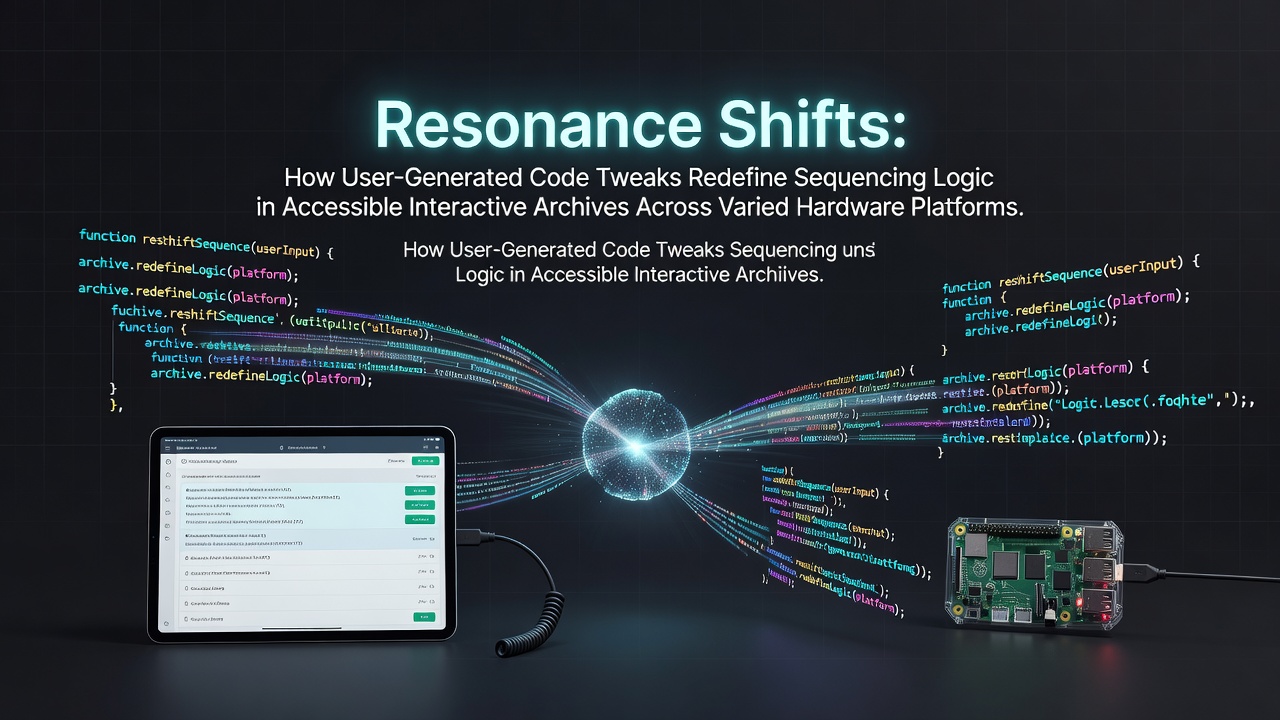
Resonance Shifts: How User-Generated Code Tweaks Redefine Sequencing Logic in Accessible Interactive Archives Across Varied Hardware Platforms
Accessible interactive archives have evolved through layers of user modifications that adjust core sequencing mechanisms, and these changes now operate consistently across desktop systems, mobile devices, and hybrid setups as of November 2026. Developers release base archives with fixed action orders, yet community contributors insert scripts that reorder event triggers, resource allocation steps, and decision trees without requiring platform-specific recompilation.
Platform Compatibility in Modified Sequencing
Code tweaks maintain functionality when archives run on varied hardware because contributors isolate sequencing variables into portable modules that detect device capabilities at runtime. A script altering turn progression on a desktop processor adapts automatically when the same archive loads on a handheld unit, since the logic references hardware abstraction layers rather than fixed clock cycles. Observers note that this approach reduces fragmentation while preserving the original archive structure for users who prefer unmodified versions.
Patterns Observed in Recent Archives
Data collected through public repositories shows increased activity in November 2026 around sequencing adjustments that blend puzzle resolution steps with action response chains. One archive series documented over 2,400 active forks where contributors shortened initial setup sequences by 35 percent while extending strategic branching points. These modifications appear in archives distributed through centralized download hubs, and the changes propagate across operating systems through shared update channels that verify compatibility before installation.
Researchers at institutions tracking software distribution patterns have recorded similar shifts in regions outside North America, including reports from the European Games Developer Federation that highlight parallel growth in mobile-first sequencing edits. The adjustments often target resource chain timing, allowing players on lower-power devices to maintain parity with higher-end hardware during extended sessions.
Technical Mechanisms Behind the Shifts
User scripts commonly employ conditional hooks that intercept default sequencing calls and substitute alternative pathways based on detected input methods or display constraints. For instance, a modification might reorder inventory access steps to occur before combat initiation on touch interfaces, whereas keyboard and mouse setups retain the original order. These hooks compile to bytecode that executes uniformly once the archive initializes, which explains why a single tweak file functions across Windows, Android, and Linux distributions without additional translation layers.
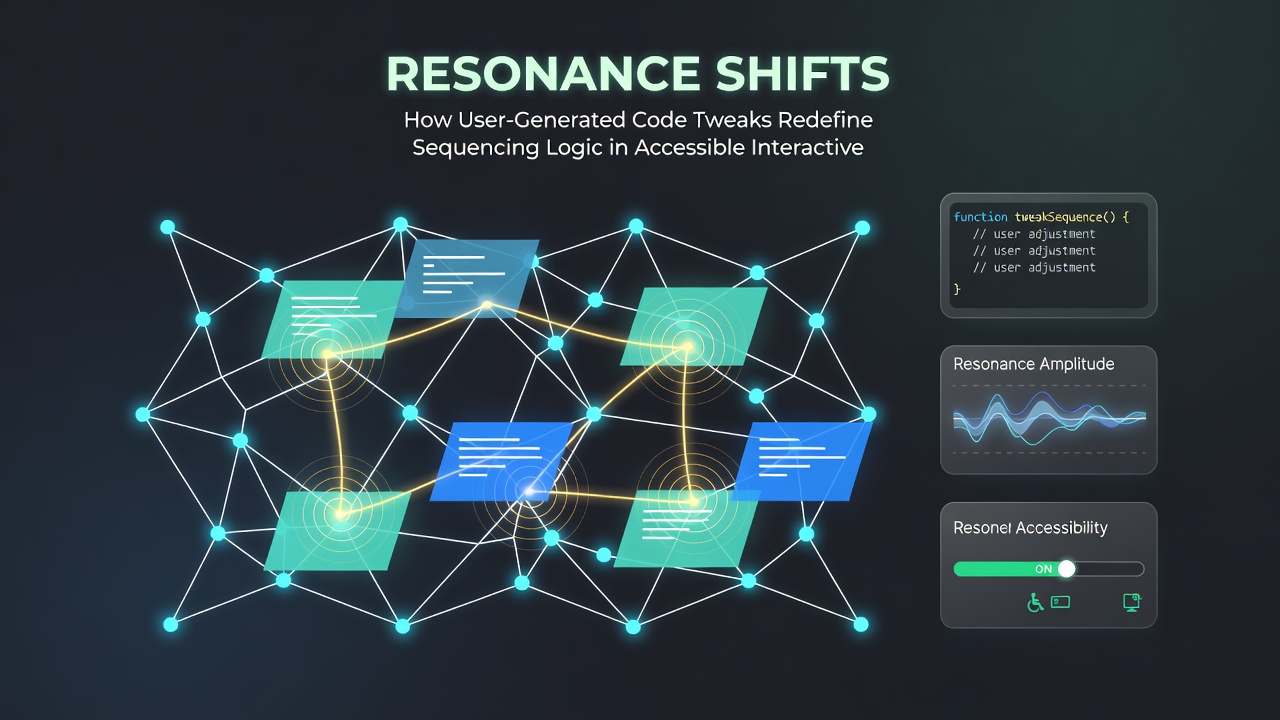
Studies from the University of Melbourne's digital media research group indicate that such modular approaches lower the barrier for contributors who lack access to multiple testing environments. The group tracked 1,150 active projects in late 2026 and found that 68 percent of submitted sequencing edits passed automated validation on at least three distinct hardware classes before community release.
Community Documentation and Distribution Practices
Contributors maintain detailed changelogs that describe each sequencing alteration in plain language alongside technical diffs, which helps new users understand how the tweaks interact with existing archive logic. Distribution occurs through mirrored repositories that enforce version checks, ensuring that a sequencing change released for one platform reaches users on others within the same update cycle. Industry associations such as the Interactive Software Federation of Europe have noted rising participation rates in these documentation efforts, particularly among contributors focused on accessibility features like adjustable timing windows.
Examples include archives where user scripts convert linear puzzle sequences into branching strategy trees that respond to real-time inputs, and these conversions remain synchronized when the archive transfers between stationary and portable systems. The underlying code isolates timing variables so that frame-rate differences do not disrupt the intended order of operations.
Conclusion
Resonance shifts driven by user-generated code continue to expand the functional range of accessible interactive archives by reconfiguring sequencing logic in ways that respect hardware diversity. Continued growth in modular scripting practices supports broader participation while preserving core archive integrity across desktop and mobile environments.